Świnoujście
Three SecondsŚwinoujście is a Polish departure point whose role connects Piet Hoffmann’s uneasy passage by sea with the route used to carry amphetamines into Sweden. The town falls away behind the ferry, but its name remains attached to a larger chain of movement: from Świnoujście by boat to Ystad, then by train to Stockholm.
Setting and departure
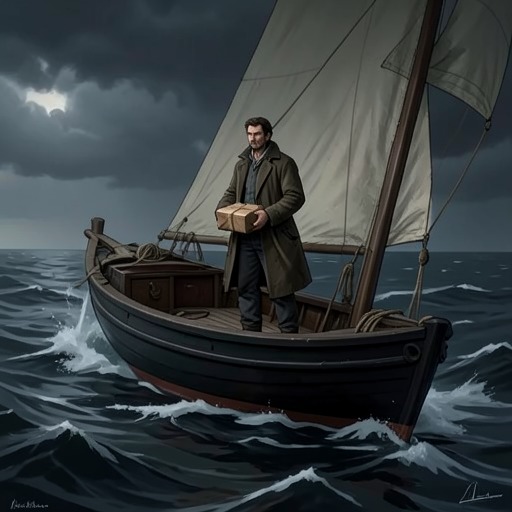
Late in spring, shortly before midnight, Piet Hoffmann stands aboard a boat as Świnoujście slowly disappears. The water below is almost black, and the houses on shore shrink into small squares before dissolving into darkness. Hoffmann grips the handrail and shivers in the wind; at twenty-nine, he is frightened. The departure is not an abstract border crossing but a physical separation from a familiar shore, with the other passengers also heading toward another country after a night’s journey.
Place in the smuggling route
Świnoujście also anchors the opening stage of a substantial amphetamine operation. Fifteen prepared couriers, unaware of one another, each carry two thousand grams from Świnoujście aboard the M/S Wawel ferry. They continue by train from Ystad, and are unloaded at different locations in Stockholm. The route makes the town more than a backdrop to Hoffmann’s departure: it is a practical transit point in a coordinated movement of drugs and people.
Narrative significance
The two scenes give Świnoujście contrasting functions. For Hoffmann, it is a vanishing shoreline and the beginning of a frightening crossing; for the smuggling network, it is the first named link in a route measured by couriers, quantities, and onward transport. The same departure point thus holds both personal vulnerability and criminal logistics, joining the novel’s intimate image of a man gripping a rail to the scale of an organized shipment.